From Tom Dooley, Managing/Fiction
Welcome to Eclectica Magazine's summer issue, and it's a doozie, with great writing galore. I'm thrilled (and relieved) to present a full selection of fiction (ten stories!) after last issue's spare output (just two!). There is more poetry and prose than you can shake a stick at (probably shouldn't being shaking sticks in this context, though), and while we're a couple weeks late (my fault!), I hope our readers and authors will find everything worth the wait.
It's always nice to see new work from former contributors, and this time around we heard from a bunch of them. Our Spotlight Runner-Up Gary Moshimer is notching his eighth appearance with the remarkable "Saving Mary Jane." Congratulations and thanks to Gary for sticking with us since we first heard from him in 2007. In an age where people throw around words like "authenticity" and "appropriation," he quietly drops a story written from the point of view of a bisexual teenaged girl in our laps. Embodying a different set of identities didn't stop him from using his imagination and craft to birth what is in my estimation a fully-formed, extremely sympathetic protagonist.
Shout out to Thomas J. Hubschman, Dennis Kaplan, and Huntley Gibson Paton, who together have now published a whopping 26 stories in Eclectica. It's a testament to their own commitment to imagination and craft that the three stories in this issue are nothing like what came before. And a big welcome to Kathryn Pratt Russell, Sam Everick, Michael Ross Dolan, John Carey, J.G.P. MacAdam, and Divya Manikandan, all of whom I hope will also be with us for the long haul.
Divya's story, "The Day Before Bhai Dooj," whisks us to the other side of the globe from the world of "Saving Mary Jane" and immerses us in an entirely different culture, but it derives its tension from the same transition from girlhood to womanhood and the same fraught sexual awakenings. Because this is also great writing, the similarities aren't a bad thing; they illustrate our shared humanity. The same can be said for the other eight stories, each presenting its own facet of this overall jewel of a fiction section.
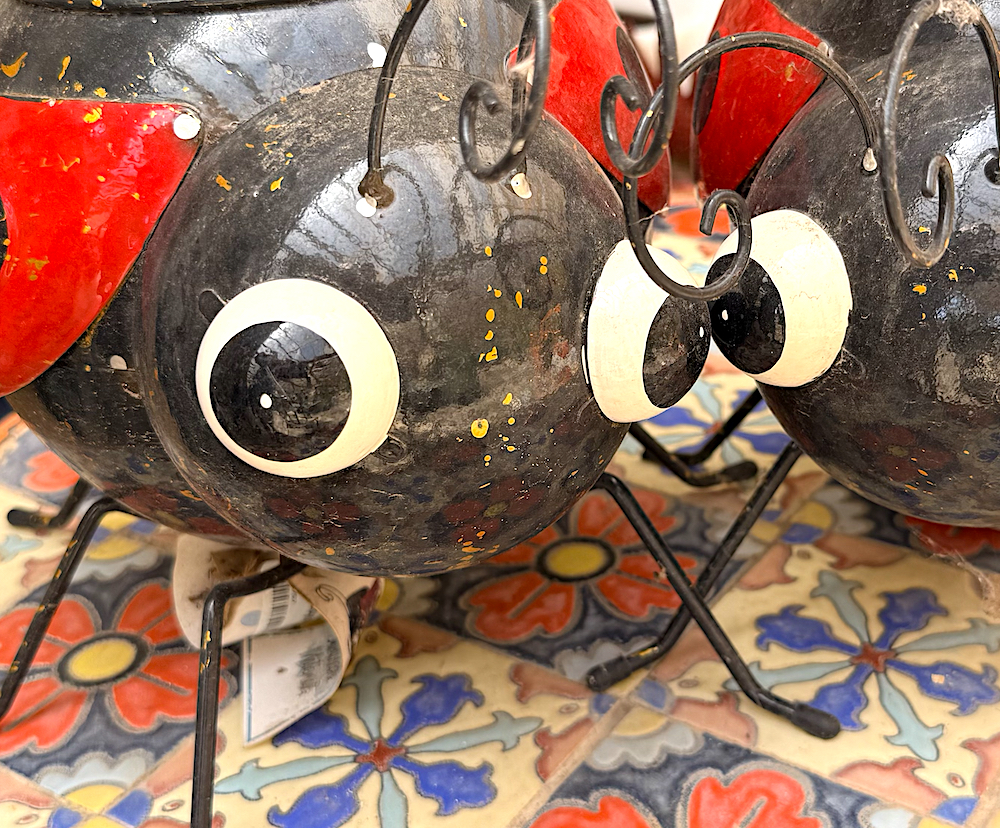
We found ourselves between options for artwork this time around, and I found myself with a couple hours to kill at a local nursery while my lovely bride supported an adoption event for Lapdog Rescue of New Mexico, so that's how the accompanying images in this issue came to be. I can't make any promises on their overall quality, but I will say it was fun creating them.
We're over halfway through our 30th year online, something we've been working hard to commemorate with five celebratory best-of anthologies: Best Fiction Volume Three, Best Poetry Volume Two, Best Nonfiction Volume Two, Speculative Edition Volume Two, and Long Form Fiction Volume One, all in what I'm calling the "rough draft" stage, which is just a hair away from the "galley" stage. We're also releasing second editions of all the previous volumes. Now that this issue is live, we can get back to work on the larger task at hand. Our next step is to launch a Kickstarter campaign. It's a massive undertaking, one befitting the weight of three decades and literally thousands of contributors.
Speaking of former contributors, Mark Stein has a poetry collection out from Kelsay Books called My Baboons Padding Around. Douglas Cole has a novel, The White Field, coming out this fall from Unsolicited Press. "Resilience in the City of Ghosts" by Kate Johnson, which just appeared in the April/May issue, was featured in Memoir Land’s Memoir Monday Round-Up of the best personal essays on the web. The ever prolific Meg Pokrass just released a surrealist chapbook titled Aurora Baldealis with her co-author Jeff Friedman. Ron Currie is getting a lot of positive press for his latest novel, We Will See You Bleed. To keep up with all the good news, join our Facebook group, the aptly named Eclectica Magazine extended "family."
It's a hot and crazy summer on Planet Earth. There's plenty of cool, sanity-restoring stuff here to enjoy, which I hope you will check out in the coming weeks.
From Marko Fong, Nonfiction
The submission window for this issue includes both Mother's and Father's day, so it's maybe not so surprising that there are so many "family" memoirs in this issue. Family, of course, is also a major theme in fiction and poetry. I suppose the big difference is that in nonfiction you don't get to hide. It take a little more courage.
Ayoung Kim's "Five Dollar Midlife Crisis," our nonfiction Spotlight selection, explores the reverse dependency of immigrant parent on child along with its limits. Elizabeth Marr's "A Family Outing" goes in the other direction as a mother who once attended heavy metal concerts herself decides to accompany her son and his friends to one and observe the goings on from a mother's point of view. As immigration has drawn even more attention, Irina Ruvinsky in "How to Practice Loosing" shares her Jewish family's departure from the Soviet Union and the anxiety and fear that comes with leaving one's country. Danijela Tomic's travel article about returning to Croatia to renew her passport offers an intriguing bookend to Ruvinsky's piece, while Zach Abend recalls the impact of a charismatic but absent father.
Finally, Kathy Karlson and Rachel Kerwin's ekphrastic contribution to Miscellany—this one includes photos—isn't about family per se, but it is a meditation on mother nature culminates with an image of remembered father and dying mother with a family gathering at a table.
From Christine Potter, Poetry
Summertime = Gritty Nostalgia.
Eclectica's Summer poetry section this time is gritty but nostalgic. I think we're usually a little gritty. But especially when the world is as dark as it has been lately, a bit of sweet escapism feels like a human right. So bring on the nostalgia! It's therapeutic to remember childhood swimming lessons and starlight! But I'm posting notice right here: this does not absolve you of your voting, marching, and letter-writing duties.
Still, this is a delightful group of poems, and as I picked them out and put them in order, I found myself happily overwhelmed with memory: the tartan-patterned metal cooler that my mom filled with cans of fruit juice for the annual ride to Cape Cod, the smog-shrouded stars of a humid Hudson Valley night. We kick off the section this time with two vivid poems by Jordan Cobb. The first, "Holy Water," about learning to swim, is cinematic in detail, really focused. And the second, a tale of the drunken loss of its narrator's "pseudo-virginity," is just as impressive, complete with lethally powerful jungle juice brewed for a college "not-frat" party.
Jim Murdoch, a Scottish poet who resurfaced for our forthcoming 30th anniversary anthology, ponders our ability to "disable the/mechanism that enables dreams to/become reality." We have another Navajo story in a poem by Tina Denetclaw, about a solar eclipse, "Jóhonaa\'éí 'éí Daaztsą́ ." In it, nothing seems disabled and the leaving and return of light are both dream-like and holy.
Carol Parris Krauss ponders the loss of both her parents in "My Mother Winter/Father Spring." Her prose poem is a gentle meditation on grief that includes chicken mull soup, Dolly Parton, and gardens new-planted for spring. Loukia Borrell's poem "I Was Only A Little Sad When You Died," is about a mother so critical it's almost dangerous to mourn her—but the last stanza, with its image of the mother and narrator's gloved hands touching, could make a stone weep. And speaking of parenting, don't miss Lisa Delan's "I Watch The Great British Baking Show." What she does with imagery, especially in the close of that poem, is masterful.
I'm not even going to describe Ron Riekki's three poems about sleep. They are charming, terrifying, and pitch-perfect. Juan Pablo Mobili's back in the mag with "The Unlikely Honor of Not Paying Attention," imagining the baby robins nested on his front porch watching him exhale cigarette smoke "like fog from a river."
Haresh Bojawani manages to fit almost everything else in the section together in his two poems about being a Hindu refugee, "The Son of a Hindu Refugee" and "About an Anger." Especially with the nightmare we are forcing upon people running to this country for freedom and even survival, these poems are required reading.
And I simply love Dolo Diaz's "Canine for a Day," celebrating the liberty we grant to dogs:
You see someone
you don't like so much,
and instead of pretending
you prickle up and have
to be pulled away...
It's a funny, smart poem.
We're back to nostalgia with Steve Bushman's two growing-up-in Florida poems and his "Halloween in the X-Ray Department, Early '90's," about X-raying trick or treat bags for nervous parents to make sure the candy is safe.
Summer's Word Challenge words were tiresome, bulletin, amber, and nap. Both the political and the luxuriously sleepy results will please you. I'm especially fond of Madronna Holden's "When I Was Your Age," which puts a loving end to the endless generational wars. And whatever you do, don't miss the imagery in David Anson Lee's "The Weather That Knew My Name." Want to take the Word Challenge for our Fall Issue? The words are zip, orchestra, shrinking, and truth. Have a wonderful summer, enjoy this epic issue, and see you when the weather starts to cool.