I grew up both in the Mongolian countryside where the impacts of former socialism are still strong in Mongolia, and in the capital city, Ulaanbaatar, where democratic ideas are starting to take hold.
Growing up experiencing two completely different political ideologies, I became very curious about how socialist governments turned people into believers of propaganda, making them think it was true. One example of this propaganda is Damdin Sükhbaatar, whom many Mongolians believe to be a great hero, but the truth is more complicated.
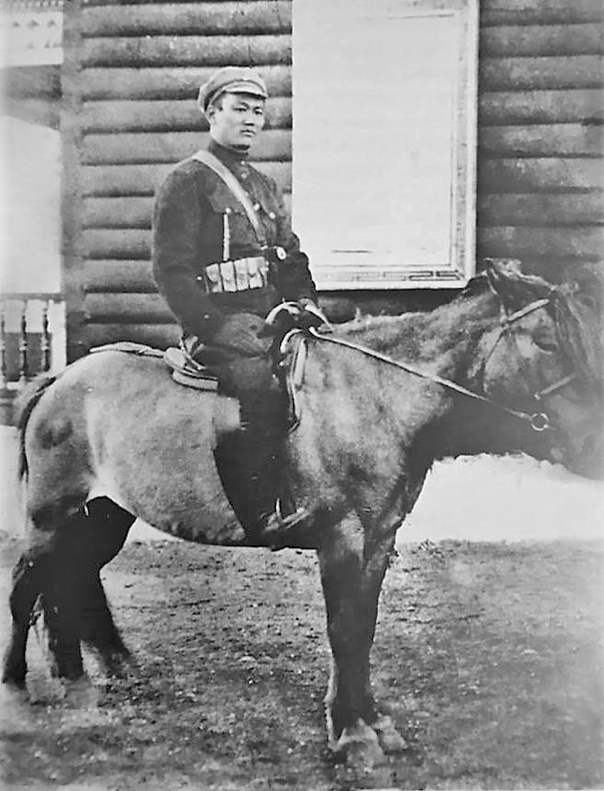
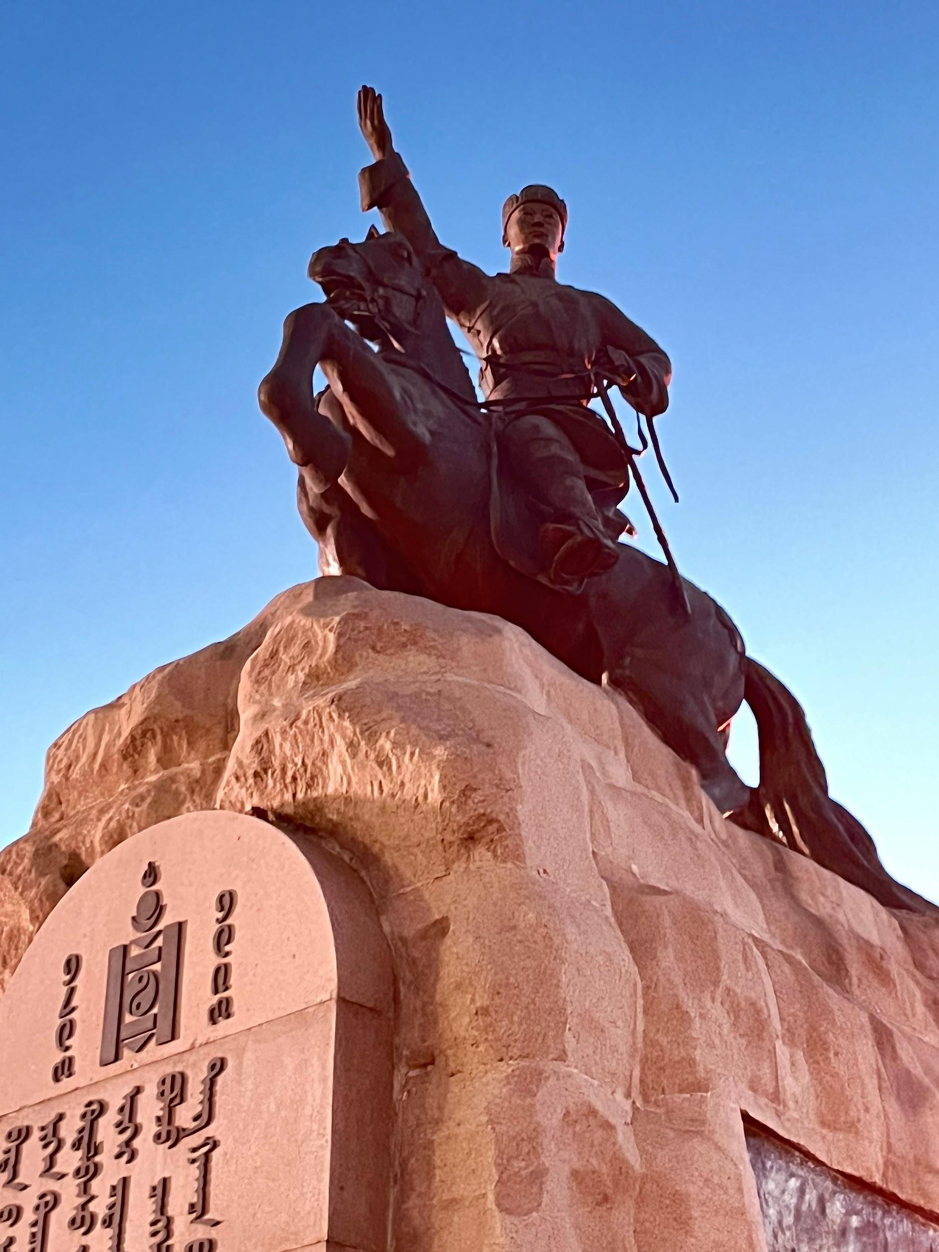
Today, his name and image dominate modern Mongolian history and culture. Sükhbaatar Square fronts the Government Palace. According to folklore, his horse urinated on the square—a sign of a great place, as per Mongolian superstition. At the square's center stands a statue of him proudly riding a horse. If you visit Mongolia and use the local currency, tugriks, you'll find Genghis Khan's portrait on the higher denominations and Sükhbaatar's on the smaller ones. Not only does his name grace currency, but a province, a city, and numerous villages bear his name. Art galleries in Ulaanbaatar are filled with portraits of him. I even graduated from a high school named after Sükhbaatar. Simply put, Sükhbaatar is Mongolia's second-most iconic figure after Genghis Khan.
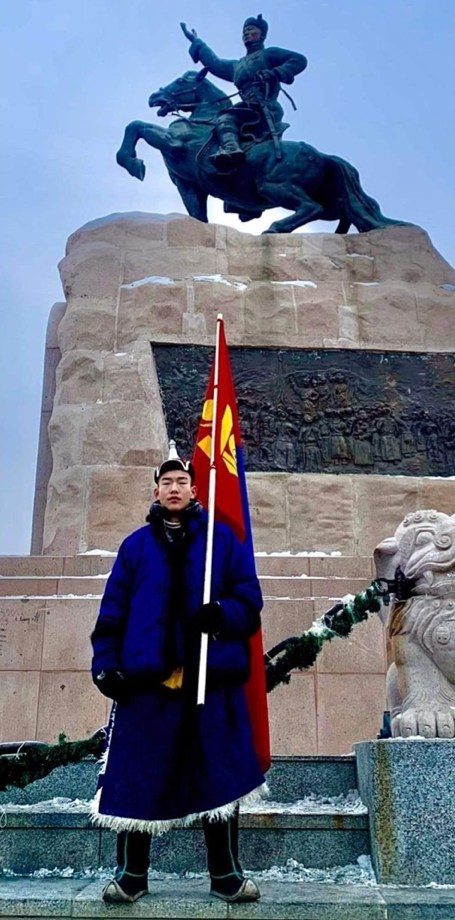
Two years ago, a major corruption scandal involving coal revenue came to light; many politicians had embezzled income from the country's coal industry. This revelation sparked protests from for several weeks. To draw more public attention, some protesters dressed as Damdin Sükhbaatar, using his image as a symbol of justice and resistance.
If I were to mention every Mongolian attempt to honor Sükhbaatar, the list would be endless. But how did it all begin?
Damdin Sükhbaatar was born on February 2, 1893, to a poor family. His father sent him to learn basic arithmetic and traditional Mongolian script from educated locals. At 18, he joined the military, and in 1921 he played a key role in Mongolia's independence. A year later, he became Minister of Defense. However, in 1923, at just 30 years old, he died—allegedly poisoned.
The Soviets played a significant role in shaping Sükhbaatar's larger-than-life persona. To push socialism into Mongolian society, the Soviet Union needed a relatable figure to represent their agenda. They portrayed Sükhbaatar as Mongolia's equivalent of Lenin—a hero who founded the Mongolian People's Revolutionary Party and transformed the nation into a socialist state.
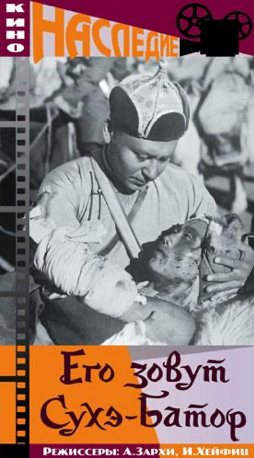
One of their tactics was film. Lenin famously declared, "The cinema is the most important of the arts," and socialist regimes used it extensively for propaganda. In Mongolia, the 1942 film His Name is Damdin Sükhbaatar depicted his life. Interestingly, Sükhbaatar was portrayed not by a Mongolian actor but by Russian actor Lev Sverdlin. This film and others showed him as a champion of socialism, a fabricated image many Mongolians still believe.
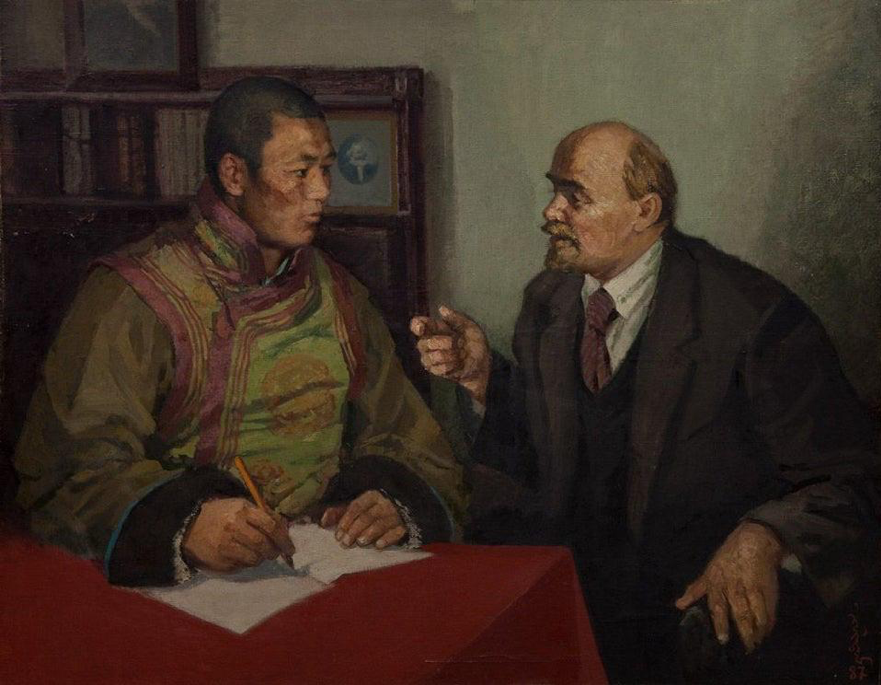
For example, many think Sükhbaatar met Lenin in November 1921 and signed agreements on Mongolian-Soviet relations. In reality, the two never met. Soviet propagandists staged fake videos and artwork to create this illusion.
At the time, most Mongolian revolutionaries were democratically inclined. Figures like Danzan and Bodoo opposed socialism and even introduced the Mongolian Dollar as currency. However, Mongolia had little choice but to align with the Soviet Union to preserve its independence. The Soviets, therefore, needed a non-political figure to symbolize their agenda, and Sükhbaatar, a military man without strong political views, fit the role perfectly.
Mongolian professor Byambyn Rinchen once remarked that much of what is known about Sükhbaatar is fiction. Even his whip, displayed in museums, was fabricated. Films and propaganda also falsely depicted him as opposing Bogd Khan, Mongolia's spiritual leader. In reality, Sükhbaatar was close to Bogd Khan and even visited him to play chess.
Sükhbaatar's sudden death remains suspicious. Officially, he died of a severe cold, but this explanation seems implausible for a healthy, fit military officer who was just 30. The historical record suggest Elbegdorj Rinchino, a Buryat communist, poisoned him. After his burial, the Soviets exhumed his body, removed his internal organs and brain, and transported them to the Soviet Union for unknown reasons.
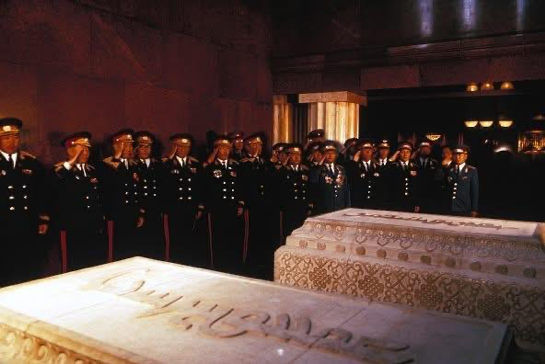
Even his remains are shrouded in mystery. The body interred in the mausoleum at Sükhbaatar Square until the 2000s didn't match his known height—it belonged to someone much shorter. Was it really Sükhbaatar? We may never know.
Damdin Sükhbaatar's heroism was largely fiction. Soviet propaganda turned him into a hero molded to fit their agenda. While he may not have been the hero the Soviets portrayed, Sükhbaatar deserves some recognition for his real contributions to Mongolia's history, but it's time to see him not as a symbol of socialism but as a man who played a role in shaping Mongolia's destiny. As time passes, Mongolians are beginning to question the myths surrounding him.
After all, if we are truly democratic, we must reject the false propaganda inherited from socialism. A revolution isn't merely about changing governments; it's about transforming how we perceive the world.